Introduction
Transporting archery equipment requires more thought than simply placing a bow in a vehicle and heading to the range. A takedown recurve bow is designed to be separated into components, which makes transportation more convenient, but the individual parts still need to be protected from impact, moisture, dirt, and unnecessary movement.
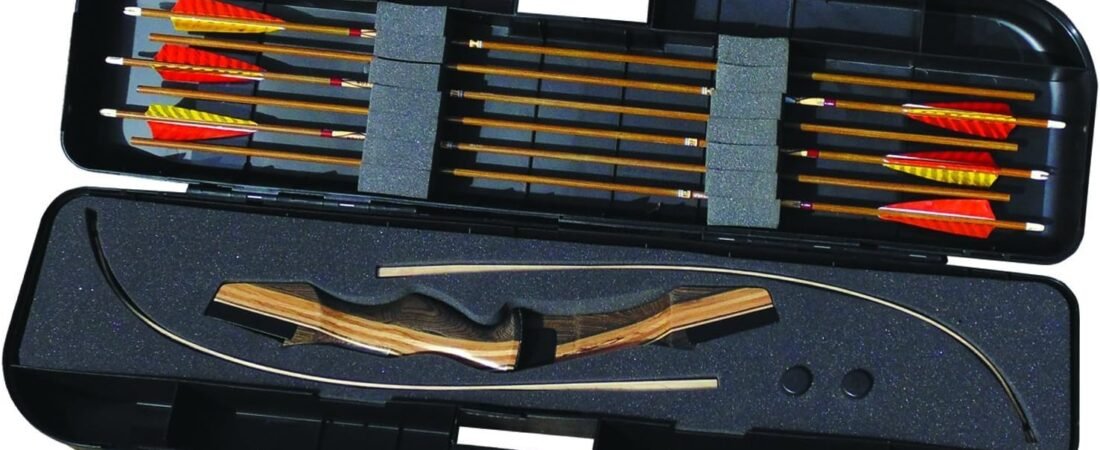
The Vista Traveler Takedown Case, Black, 37-Inch is an archery case designed specifically around the needs of takedown recurve bow users. The case has an overall length of 37 inches and is constructed using nylon, foam, and a hard-case style exterior. Product specifications associated with the listing identify capacity for up to 18 arrows measuring up to 34 inches, along with integrated storage areas for smaller archery accessories and a built-in broadhead wrench.
The design is different from a large universal bow case. Instead of providing a large empty interior intended to accommodate many different types of archery equipment, the Traveler focuses on keeping a takedown recurve setup organized within a relatively compact case.
That distinction is important when considering compatibility. A case designed around takedown recurves is not automatically appropriate for a compound bow, longbow, or every possible recurve configuration. The physical dimensions of the bow components, accessories, and arrows should be checked before use.
The case can be useful for transportation to an archery range, storage between sessions, or organizing a takedown bow and related equipment. At the same time, its weather-resistant construction should not be confused with a completely waterproof storage container, and users should consider the conditions in which the case will be transported or stored.
This guide explains the main features of the Vista Traveler, how its storage system can be used, what types of archers may find this case relevant, and what to consider when comparing it with soft bow bags, larger hard cases, and other archery storage solutions.
Key Features
37-Inch Overall Case Length
The Vista Traveler has an overall length of 37 inches.
That dimension is important because the case is designed around a takedown configuration rather than an assembled full-length recurve bow.
A takedown recurve can be separated into its riser and limbs. Once disassembled, the individual components occupy considerably less space than the fully assembled bow.
The 37-inch case format provides a relatively compact way to organize these components while still leaving room for arrows and smaller accessories.
Before selecting a case, however, archers should measure their own equipment. The overall bow length is not the only dimension that matters. Limb shape, riser dimensions, string storage, arrow length, and accessories can all affect whether the equipment fits properly.
Designed for Takedown Recurve Bows
The product description specifically identifies the case as being designed for takedown recurve bows.
This is one of its most important characteristics.
A takedown recurve bow generally consists of a central riser and removable limbs. The limbs attach to the riser when the bow is assembled and can be separated for transportation or storage.
A purpose-oriented case can therefore arrange the interior around those separate components.
This approach can provide a more organized storage system than simply placing a disassembled bow into a large, empty container.
It also means compatibility should be considered carefully. A case designed for a particular style of bow may not accommodate equipment with significantly different dimensions.
Foam Interior
The case uses foam as part of its protective interior. The listed material combination includes nylon and foam.
Foam serves several purposes in archery storage.
First, it can create separation between components.
Second, it can reduce direct contact between the bow and the outer shell.
Third, it can help limit movement during transportation.
This is particularly useful because archery equipment can be damaged by repeated contact or unnecessary movement even when no major impact occurs.
The protective value of the foam depends on how well the equipment fits into the designated areas. A case should not be forced closed around components that are too large or positioned incorrectly.
Capacity for Up to 18 Arrows
The listed specifications indicate that the case can hold up to 18 arrows measuring up to 34 inches in length.
Arrow storage is an important consideration because arrows are relatively long and can be awkward to transport separately.
Keeping arrows with the bow can make range preparation easier and reduces the number of individual pieces of equipment that need to be carried.
The 34-inch arrow limitation should be treated as an important compatibility measurement rather than simply a general capacity figure.
Archers should measure their arrows from end to end and confirm that their particular configuration fits within the designated storage area.
Built-In Broadhead Wrench
The Vista Traveler includes a built-in broadhead wrench according to the listed product specifications.
A broadhead wrench is an archery-specific tool used when handling certain broadhead configurations.
Including an integrated tool within the case can reduce the number of separate accessories an archer needs to carry.
It is particularly relevant to users who include hunting equipment in their archery setup.
Because broadheads are sharp components, they should always be handled carefully and stored appropriately. The presence of a wrench does not remove the need for safe handling procedures.
Integral Gear Storage Compartments
The case includes storage compartments intended for smaller archery accessories such as a bowstring, armguard, finger tab, or glove.
These compartments address a common organizational problem.
A bow is not the only equipment an archer needs. Even a simple range session may involve:
- Bowstring
- Stringer
- Armguard
- Finger tab
- Shooting glove
- Small tools
- Spare accessories
- Maintenance items
Keeping smaller equipment in designated compartments can make the case more useful as an equipment organizer rather than merely a protective shell.
Weather-Resistant Construction
The listed product specifications describe the case as having a weather-resistant hard case.
Weather resistance is useful for normal transportation when equipment may encounter light moisture or changing outdoor conditions.
However, weather resistant does not necessarily mean waterproof or submersible.
If the case is exposed to prolonged rain, standing water, or high humidity, additional protection may be appropriate.
Archery equipment itself can also be sensitive to moisture. Even when the case provides some environmental protection, wet equipment should be dried appropriately rather than stored damp for long periods.
Lockable Snap Closures
The case uses lockable snap closures.
Closures serve two main purposes: keeping the case closed and helping prevent the lid from opening unintentionally during transportation.
The ability to add a lock can provide an additional level of control over access to the contents.
A lock should not be interpreted as making the case a high-security container. The strength and design of the entire case remain relevant.
For transportation, users should also consider the requirements of the carrier, range, competition venue, or other location where the equipment is being transported.
Why a Takedown Bow Needs a Different Storage Approach
A takedown recurve is different from a one-piece bow because it can be disassembled.
That characteristic provides several practical advantages for transportation.
A full-length bow can require a long case and may be awkward to fit into a vehicle.
With a takedown configuration, the limbs and riser can be separated.
This creates an opportunity for a more compact case design.
However, disassembly also means there are multiple individual components that need to remain together.
A suitable case therefore needs to accomplish several things:
- Protect the riser.
- Protect the limbs.
- Prevent unnecessary movement.
- Keep arrows organized.
- Provide room for essential accessories.
- Make transportation easier.
- Keep the case securely closed.
The Vista Traveler’s design addresses these requirements by combining a compact case format with foam protection and dedicated accessory storage.
How It Can Be Used
Transportation to an Archery Range
One of the most straightforward uses is transporting a takedown recurve to a local range.
Instead of carrying the riser, limbs, arrows, and accessories separately, the equipment can be organized within the case.
This can make preparation at the range more efficient.
Before leaving home, the archer can verify that the necessary equipment is packed, close the case, and transport the entire setup as one unit.
This is particularly useful for people who regularly travel between home and an archery club or practice location.
Vehicle Transportation
A 37-inch case can be easier to manage inside many vehicles than a case designed for a fully assembled long bow.
The case can be placed in an appropriate area of the vehicle where it will not interfere with driving controls or visibility.
It should not be positioned where it could become a dangerous projectile during sudden braking.
The equipment should also be protected from extreme temperatures when possible.
Vehicles can become extremely hot or cold, and prolonged exposure to extreme conditions can affect certain archery materials.
Home Storage
The case can also function as a storage solution between archery sessions.
Keeping the bow components inside a dedicated case can reduce exposure to dust and accidental contact.
This can be particularly useful for people who do not have a dedicated archery equipment room.
The case can be stored horizontally or in another manufacturer-compatible position where it will not be crushed, bent, or exposed to moisture.
Range Equipment Organization
The internal compartments can be used to keep smaller accessories together with the main equipment.
For example, an archer might organize:
- String
- Armguard
- Shooting tab
- Glove
- Small adjustment tools
- Other compact accessories
This reduces the chance of leaving small items behind after a practice session.
Outdoor Archery Activities
The case can also be relevant when transporting a takedown recurve to outdoor shooting locations.
Outdoor environments introduce additional concerns, including dirt, moisture, uneven terrain, and longer walking distances.
The case’s protective shell can provide a layer of separation between the equipment and the surrounding environment.
However, users should still avoid unnecessarily exposing the case to severe weather or rough handling.
Who It May Be Suitable For
Traditional Recurve Archers
The most obvious audience is people using takedown recurve bows.
The case’s dimensions and internal organization are specifically oriented toward that type of equipment.
An archer who frequently separates a bow for transportation may find a purpose-designed case more convenient than carrying individual components.
Recreational Archers
People who shoot at local ranges or clubs may benefit from having one organized container for their equipment.
A dedicated case can make the transition between storage and transportation simpler.
Archers With Limited Vehicle Space
A takedown bow case can be especially useful for people who regularly transport equipment in a smaller vehicle.
The ability to separate the bow into components allows the case to remain relatively compact.
Hunting-Oriented Archers
The integrated broadhead wrench and accessory storage can be relevant to users whose archery equipment includes hunting-related components.
However, hunting equipment and broadheads require additional safety precautions.
Sharp broadheads should be stored and transported so that they cannot accidentally contact people, clothing, or other equipment.
Users should also comply with all applicable hunting regulations.
Beginners Building an Archery Setup
A case can be useful for keeping a developing archery setup organized.
Beginners often accumulate accessories gradually, and having dedicated storage can help prevent small items from becoming separated from the main equipment.
Important Things to Consider
Confirm Your Bow’s Dimensions
The most important compatibility check is physical fit.
The case is designed for takedown recurve bows, but not every takedown recurve has identical dimensions.
Before purchasing or using the case, compare:
- Riser dimensions
- Limb dimensions
- Overall disassembled length
- Arrow length
- Accessory dimensions
A 37-inch case should not be assumed to fit every takedown configuration simply because the bow is described as a recurve.
Check Arrow Length
The listed maximum arrow length is 34 inches.
Measure your arrows rather than estimating their length.
This is especially important for taller archers or setups that use longer arrows.
If arrows exceed the available storage dimensions, they may need to be transported separately.
Consider Your Accessories
A basic takedown setup may fit comfortably while a more elaborate configuration may require additional storage.
Consider whether you need to transport:
- Quiver
- Stabilizer
- Sight
- Arrow rest
- Stringer
- Armguard
- Tab
- Glove
- Tools
- Spare strings
- Maintenance equipment
The case’s integrated compartments are useful for small accessories, but they should not be assumed to accommodate every accessory used by every archer.
Understand Weather Resistance
The case is described as weather resistant, but weather resistance is different from a fully waterproof design.
For routine transportation in light rain or changing weather, this distinction may not be critical.
For extended exposure to heavy rain, however, additional protection may be appropriate.
It is good practice to dry the case and its contents after significant moisture exposure.
Think About Storage Environment
Archery equipment should generally be stored in an environment appropriate for the materials used in the bow and accessories.
Avoid leaving the case in locations with excessive humidity, direct sunlight, or extreme temperatures for extended periods.
A vehicle trunk may be convenient for transportation, but long-term storage inside a hot vehicle is a different matter.
Locking Does Not Mean Theft-Proof
The lockable closures can help secure the case, but the case should not be treated as a high-security safe.
When valuable equipment is being transported, users should consider the entire transportation environment.
A locked case inside an unattended vehicle, for example, should not be considered completely secure.
Protecting a Recurve Bow During Transportation
Transportation exposes archery equipment to several types of stress.
Even when a case is not dropped, the equipment may experience:
- Vehicle vibration
- Sudden braking
- Movement inside a trunk
- Contact with other equipment
- Temperature changes
- Moisture
- Dust
A properly organized interior can reduce unnecessary movement.
The bow components should be placed into their designated positions rather than being allowed to move freely inside the case.
If an accessory does not fit safely, it is better to transport that accessory separately than to force the case closed.
Organizing the Interior
Good organization can make a bow case much more useful.
A practical arrangement may involve placing the main bow components in their designated foam areas first.
The arrows can then be positioned in their intended storage area, assuming their length is compatible.
Small accessories can be placed into the integrated compartments.
The goal is to avoid having loose equipment move around the interior.
A simple packing routine can also make it easier to notice when something has been forgotten.
For example, an archer could use the same sequence every time:
- Riser
- Limbs
- Arrows
- String
- Stringer
- Armguard
- Tab or glove
- Small tools
The exact arrangement should follow the physical design of the case and the equipment being stored.
Maintenance of the Case
A bow case does not require complicated maintenance, but periodic inspection is useful.
Clean the Exterior
Dust and dirt can accumulate on the outer surface.
A soft cloth and an appropriate cleaning method can help maintain the case.
Avoid using aggressive chemicals unless the manufacturer specifically approves them.
Inspect the Closures
Check the snap closures periodically.
If a closure becomes loose, damaged, or difficult to secure, the case should be inspected before being used to transport valuable equipment.
Inspect the Foam
The foam is part of the protective system.
Check for:
- Tears
- Compression
- Separation
- Excessive wear
- Damage from accessories
Damaged foam may not hold equipment as securely as intended.
Keep the Interior Dry
If the case becomes wet, allow it to dry appropriately before storing archery equipment inside.
Closing damp equipment inside a case for extended periods can create an unfavorable environment for materials and metal components.
Broadhead and Sharp-Accessory Safety
The built-in broadhead wrench is a useful archery-specific feature, but broadheads require careful handling.
Broadheads are designed with sharp cutting surfaces and should be treated as hazardous equipment when being installed, removed, or transported.
Users should:
- Keep sharp components covered when possible.
- Avoid loose broadheads inside the case.
- Use appropriate protective containers.
- Keep them away from children.
- Handle them with deliberate movements.
- Follow the manufacturer’s instructions for the specific broadhead.
A bow case should help organize equipment, but safe handling remains the responsibility of the user.
Comparison of General Bow Case Categories
Different bow cases serve different purposes. The Vista Traveler is best understood by comparing it with several broader categories.
Soft Bow Bags
Soft bow bags are generally lightweight and flexible.
They can be convenient for local range trips and storage where impact protection is not the primary concern.
Their flexibility can also make them easier to store when empty.
The tradeoff is that they generally provide less rigid structural protection than a hard case.
Hard Takedown Recurve Cases
A hard takedown case is specifically designed around disassembled recurve equipment.
This category can provide better structural separation and impact protection than many soft bags.
The Vista Traveler belongs to this general category, with its 37-inch format, foam interior, and hard-case design.
Large Universal Hard Cases
Universal hard cases are designed to accommodate a broader range of equipment.
They may provide more space for accessories, but that extra space can make the case larger and heavier.
For an archer who only needs to transport a takedown recurve and essential accessories, a larger case may provide more capacity than necessary.
Compound Bow Cases
Compound bows have very different physical requirements.
Their cams, cables, limbs, and axle-to-axle dimensions can require substantially different interior geometry.
A takedown recurve case should therefore not be treated as a general replacement for a compound bow case.
Longbow Cases
Longbows are typically stored in long, narrow cases because the bow does not break down into the same components as a takedown recurve.
The compact format of the Vista Traveler is therefore more relevant to takedown designs.
Airline-Oriented Heavy-Duty Cases
Travel cases designed specifically for intensive transportation may use thicker shells, reinforced hardware, gasket systems, and additional security features.
These cases can be appropriate for users who require maximum environmental and impact protection.
The tradeoff is usually greater size and weight.
Choosing Between a Soft Bag and a Hard Case
The choice depends largely on how the equipment is transported.
A soft case may be sufficient when:
- The bow is carried directly from home to the range.
- The equipment is rarely exposed to impact.
- Lightweight storage is the priority.
- The user has limited storage space.
A hard case may make more sense when:
- The equipment is transported frequently.
- The case may be placed in a busy vehicle.
- Protection from accidental impact is important.
- The user wants a more rigid storage structure.
Neither category is universally appropriate.
The best choice depends on the equipment, transportation conditions, and level of protection required.
Practical Transportation Checklist
Before leaving for the range, an archer can use a simple checklist.
Bow
- Riser packed
- Limbs packed
- String packed
- Components positioned correctly
Arrows
- Correct number packed
- Length compatible with the case
- Points protected
- Shafts inspected
Accessories
- Armguard
- Tab or glove
- Stringer
- Necessary tools
- Other required equipment
Case
- Foam positioned correctly
- Lid closes without pressure
- Snap closures fully engaged
- Lock added if required
- Exterior dry
A checklist can be especially useful when the same equipment is transported regularly.
Frequently Asked Questions
What is the Vista Traveler Takedown Case?
The Vista Traveler is an archery storage and transportation case designed for takedown recurve bows. The listed model is black and has an overall length of 37 inches.
What type of bow is it designed for?
It is designed for takedown recurve bows.
It should not automatically be considered compatible with compound bows, longbows, or every other type of recurve.
How long is the case?
The overall case length is listed as 37 inches.
How many arrows can it hold?
The listed capacity is up to 18 arrows, with arrows up to 34 inches in length.
Does the case include a bow?
No. The case is a storage and transportation accessory. The product listing specifically states that the bow and arrows are not included.
Does it include arrow storage?
Yes. The listed design provides storage for up to 18 arrows measuring up to 34 inches.
Does it have compartments for accessories?
Yes. The product information identifies integral storage compartments for smaller items such as a string, armguard, tab, or glove.
Does it include a broadhead wrench?
Yes. A built-in broadhead wrench is listed as one of the case’s features.
Is the case waterproof?
The available product specifications describe it as weather resistant rather than establishing that it is completely waterproof.
Users who expect prolonged exposure to heavy rain or other wet conditions should consider additional protection.
Can a compound bow fit inside?
The case is specifically designed around takedown recurve bows. A compound bow has different dimensions and components, so compatibility should not be assumed.
Can it be used for a one-piece recurve bow?
The case’s design is intended for takedown equipment. A one-piece recurve may not fit correctly because its physical configuration is different.
Is the case suitable for storing arrows?
Yes, provided the arrows fall within the listed storage dimensions. The product specifications identify capacity for up to 18 arrows up to 34 inches long.
Can accessories be stored inside?
Small accessories such as a bowstring, armguard, finger tab, glove, and similar items can be organized in the integrated storage areas.
Larger accessories should be checked individually for fit.
Does the case have locking closures?
The product is described as having lockable snap closures.
The lockable design can help restrict access, but it should not be considered equivalent to a heavy-duty security container.
Is it suitable for outdoor transportation?
It can be useful for transporting compatible takedown recurve equipment to outdoor shooting locations.
Weather conditions should still be considered because weather resistance does not mean unlimited protection from rain or moisture.
How should the case be stored?
Store it in a dry environment away from excessive heat, prolonged moisture, and direct environmental exposure.
If the case becomes wet, allow it to dry appropriately before storing equipment inside.
What should I check before purchasing?
The most important checks include:
- Bow type
- Riser dimensions
- Limb dimensions
- Arrow length
- Accessory requirements
- Case dimensions
- Transportation conditions
Compatibility should be based on measurements rather than the general description of the bow.
Conclusion
The Vista Traveler Takedown Case, Black, 37-Inch is designed around a specific transportation problem: keeping a takedown recurve bow and its essential accessories organized and protected when moving between storage, the vehicle, and the archery range.
Its 37-inch overall length, foam-based interior, integrated accessory compartments, lockable snap closures, and storage capacity for up to 18 arrows measuring up to 34 inches make its design particularly relevant to takedown recurve equipment. The built-in broadhead wrench adds another archery-specific function, while the weather-resistant case construction provides an additional layer of protection during ordinary transportation.
The most important consideration is compatibility. Not every recurve bow has identical dimensions, and the fact that a bow is a takedown model does not automatically mean it will fit perfectly. Measuring the riser, limbs, arrows, and important accessories before choosing a case can prevent problems later.
The case is also best understood as a transportation and storage solution rather than a completely sealed environmental container. Weather resistance can be useful during normal travel, but prolonged exposure to heavy rain or moisture may require additional precautions.
For archers who regularly transport a compatible takedown recurve, organization can be just as important as protection. Keeping the riser, limbs, arrows, string, armguard, shooting accessories, and small tools together can make preparation and packing more straightforward.
Different archers will also have different case requirements. A lightweight hard case may be practical for range transportation, while someone requiring extensive accessory capacity, extreme weather protection, or heavy-duty travel protection may need a different category of case.
Ultimately, the right bow case is determined by the equipment being transported and the conditions in which it will be used. Measuring the bow and arrows, considering accessory requirements, and understanding the distinction between weather resistance and waterproof construction are useful steps before making a decision.
If the dimensions and storage arrangement match your takedown recurve setup,