Introduction
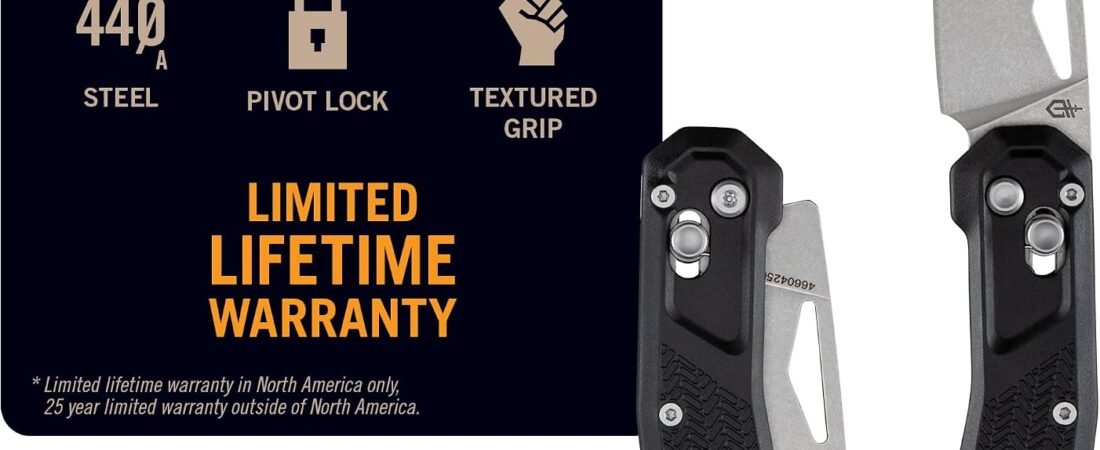
A folding pocket knife is a compact tool designed around portability, controlled access to a cutting edge, and convenient storage. Unlike a fixed-blade knife, a folding model can be closed when the blade is not needed, making the overall package easier to carry and store. The Gerber Gear Vista is a folding pocket knife built around a 3.24-inch plain-edge drop-point blade made from 440A stainless steel, an ambidextrous pivot-lock mechanism, a pocket clip, and a lanyard hole.
The combination of these features places the Vista within the everyday folding-knife category rather than the larger fixed-blade outdoor-tool category. Its design is relatively straightforward: a folding blade, a locking mechanism, a handle intended for controlled use, and carry features that allow the closed knife to be secured to clothing or equipment.
Understanding a folding knife involves more than looking at blade length or steel type. The way a blade locks, how the handle is shaped, how the knife is carried, and how the steel should be maintained all affect its practical use. Local laws can also determine where and how a folding knife may legally be carried.
The 3.24-inch blade is particularly relevant because blade length is one of the specifications that users may need to consider when checking local regulations. Knife laws can vary substantially between states, municipalities, workplaces, schools, public buildings, and other locations. A product specification should therefore never be treated as legal advice.
This article examines the Gerber Gear Vista from an informational perspective, covering its construction, folding mechanism, blade characteristics, everyday utility, maintenance, safety considerations, and differences between general categories of folding knives.
Key Features
3.24-Inch Drop-Point Blade
The Vista uses a 3.24-inch drop-point blade.
A drop-point profile is characterized by a spine that gradually slopes downward toward the tip. This creates a practical blade shape that is commonly found on general-purpose outdoor and utility knives.
The profile provides a relatively broad cutting surface while maintaining a useful point for controlled everyday tasks.
Blade geometry can influence how a knife performs. A drop-point design is generally associated with versatility rather than being optimized for one highly specialized cutting application.
The Vista’s blade is also described as a plain edge, meaning the primary cutting edge does not use a serrated pattern.
A plain edge can be convenient for ordinary cutting and can be maintained with common sharpening methods appropriate for the blade steel.
440A Stainless Steel
The blade is made from 440A stainless steel.
440A is a commonly used stainless steel in knives and other cutting tools. Its stainless characteristics make it appropriate for users who want a blade that can tolerate ordinary environmental exposure better than many non-stainless steels.
Like all steels, however, stainless does not mean completely immune to corrosion.
Moisture, salt, humidity, acidic materials, dirt, and prolonged exposure to unfavorable conditions can still affect a blade. Cleaning and drying remain important parts of knife maintenance.
440A is also relatively straightforward to sharpen compared with some harder modern powder metallurgy steels. That can be relevant to people who prefer practical maintenance over maximum edge retention.
The actual behavior of any blade depends on its heat treatment, geometry, sharpening condition, and use rather than steel designation alone.
Ambidextrous Pivot Lock
The Vista incorporates an ambidextrous pivot-lock mechanism.
A locking mechanism is designed to hold the blade in its open position during normal use and to allow it to be folded when the knife is being stored.
An ambidextrous design means the locking interface is intended to be usable from either side, making the knife potentially more adaptable to both left- and right-handed users.
A lock is an important safety component, but it should not be treated as a guarantee against accidental movement. Users should always maintain appropriate control of a folding knife and keep fingers away from the blade path when opening or closing it.
Pocket Clip
A pocket clip provides a convenient way to secure a closed folding knife to a pocket or compatible piece of clothing or gear.
For everyday carry, a clip can make the knife easier to locate and reduce the need to search inside a bag or pocket.
The exact orientation and mounting arrangement matter to users because carry preferences vary. Some people prefer the knife positioned with the clip facing inward, while others prefer a different orientation.
Regardless of configuration, the knife should be securely closed before it is placed into a pocket or bag.
Lanyard Hole
The Vista also includes a lanyard hole.
A lanyard hole provides an attachment point for a cord or other compatible retention accessory.
For general utility use, this can make the knife easier to retrieve from equipment or help identify it among other gear.
A lanyard should not be considered a substitute for safe storage or secure carry. It should also be used in a way that does not create an entanglement hazard.
Plain-Edge Configuration
The plain-edge blade has a continuous cutting edge rather than a combination of smooth and serrated sections.
This configuration can be useful for tasks where controlled slicing is more important than aggressive sawing through fibrous material.
It also provides a straightforward edge geometry for routine sharpening.
Different users have different preferences, so the absence of serrations is not inherently an advantage or disadvantage. It depends on the type of cutting work expected from the tool.
Understanding the Folding Design
The main distinction between the Vista and a fixed-blade knife is the folding mechanism.
When closed, the blade is stored inside the handle. This creates a more compact form factor for storage and transport.
When the knife is needed for a legitimate cutting task, the blade can be opened and secured by the locking mechanism.
This design has several practical implications.
First, the closed knife is easier to store than a fixed blade of the same approximate cutting length.
Second, the folding mechanism introduces moving components that require care.
Third, the user must understand how the locking system works before relying on the knife during ordinary cutting tasks.
The pivot area should remain reasonably clean, and excessive contamination can affect smooth operation.
Users should never force a folding mechanism that feels obstructed or abnormal.
How It Can Be Used
Everyday Utility Tasks
A folding pocket knife can serve as a compact cutting tool for appropriate everyday tasks.
Examples can include cutting:
- Packaging materials
- Cord or string
- Tape
- Thin plastic packaging
- Outdoor cordage
- General household materials where a knife is appropriate
The correct technique depends on the material being cut.
The important principle is to use the knife only for tasks that match the blade’s design and to avoid applying excessive force.
Outdoor and Camping Equipment
A folding knife can also be part of a broader outdoor equipment kit.
For example, it may be useful for ordinary camp-related utility tasks such as preparing cordage, opening packaging, or handling materials where a compact cutting tool is appropriate.
A folding pocket knife should not automatically be treated as a substitute for dedicated outdoor tools.
Tasks requiring substantial chopping, splitting, digging, or heavy cutting are generally better suited to tools specifically designed for those purposes.
Hiking and General Outdoor Carry
The compact nature of a folding knife makes this category relevant to hiking and outdoor equipment.
Before carrying one outdoors, however, users should verify local regulations and restrictions.
Rules can vary depending on location, blade length, locking mechanism, carry method, and whether the knife is openly or concealed.
A knife that is legal in one jurisdiction may be restricted in another.
Household Utility
Some people keep a folding knife as part of a household toolbox.
It may be useful for ordinary cutting tasks where a purpose-built knife is appropriate.
Keeping the knife in a designated location can also reduce the likelihood of accidental contact.
A folding knife should not be left loose in a drawer where someone could reach into it without seeing the blade position.
Workshop and Hobby Tasks
A plain-edge folding blade can sometimes be useful for small workshop or hobby tasks involving suitable materials.
However, precision craft work may be better handled with purpose-designed hobby knives, utility knives, or other specialized tools.
The general rule is to match the tool to the task rather than forcing one knife to perform every cutting job.
Who It May Be Suitable For
People Looking for a Compact Folding Tool
The Vista’s folding construction makes it relevant to users who prefer a compact tool that can be stored with the blade closed.
This can be useful for people who want a cutting tool without the bulk associated with many fixed-blade designs.
Outdoor Enthusiasts
Hikers, campers, anglers, and other outdoor users may find a compact folding knife useful as part of a larger equipment setup.
The actual suitability depends on the activities involved and local carry regulations.
Home and Workshop Users
A folding knife can also be kept as part of a general-purpose tool collection.
Its compact form can make it convenient for occasional cutting tasks without requiring a larger knife.
Left- and Right-Handed Users
The ambidextrous pivot-lock design is relevant to users who want a folding knife that does not strongly favor one hand.
However, ambidextrous operation does not mean that every aspect of the knife’s handling will feel identical to every user.
Hand size, grip preference, and familiarity with folding knives still matter.
Important Things to Consider
Check Local Knife Laws
Legal considerations should come before carrying any knife outside the home.
The Vista has a 3.24-inch blade, but blade length is only one factor that can matter legally.
Depending on where you live, regulations may address:
- Blade length
- Folding versus fixed construction
- Locking mechanisms
- Carry position
- Open versus concealed carry
- Restricted locations
- Age requirements
- Transportation
- Intent or circumstances of possession
Schools, government buildings, airports, workplaces, and other controlled environments can have additional restrictions.
Always verify current rules from the relevant official authority before carrying a knife.
A Lock Is Not a Substitute for Safe Handling
The pivot lock is designed to secure the blade in its open position, but safe handling remains the user’s responsibility.
A locking mechanism should be inspected periodically for abnormal movement or damage.
If the blade does not lock properly, the knife should not be used until the problem has been addressed.
Keep Fingers Away From the Blade Path
Folding knives create a particular hazard during closing.
A user should understand where the blade travels as it folds into the handle.
Never place fingers in the blade’s path while closing the knife.
The same principle applies when handing a knife to another person: it should be closed and secured first.
Avoid Using Excessive Force
Pocket knives are intended for cutting, not for prying, hammering, twisting, or other tasks that place unusual stress on the blade or pivot.
Using a knife as a pry tool can damage the blade, lock, pivot, or handle.
It can also increase the risk of losing control of the tool.
Keep the Blade Clean and Dry
Even stainless steel requires maintenance.
After exposure to moisture, particularly salty or humid environments, the blade should be cleaned and dried appropriately.
Any maintenance product used on the knife should be compatible with the manufacturer’s recommendations and intended for the relevant component.
Blade Steel and Maintenance
Understanding the steel is useful when planning long-term care.
440A stainless steel offers a combination of corrosion resistance and practical edge maintenance.
It is not necessary to treat the blade as if it were completely corrosion-proof.
After use in wet environments, wipe the blade dry.
If the knife becomes contaminated with dirt or other material, clean it using a method appropriate for the handle and blade construction.
Avoid storing a damp knife inside a closed pocket, bag, or container for long periods.
Periodic inspection can identify early signs of corrosion or mechanical problems before they become more serious.
Sharpening a Plain-Edge Blade
One advantage of a plain-edge blade is that it can be maintained using conventional sharpening systems.
The exact sharpening method depends on the user’s experience and equipment.
Common approaches include:
- Sharpening stones
- Guided sharpening systems
- Ceramic sharpeners
- Appropriate manual sharpening tools
The objective is to maintain a consistent edge geometry rather than removing unnecessary amounts of metal.
Over-sharpening can gradually alter the blade profile.
For users without sharpening experience, a professional sharpening service may be preferable to experimenting with aggressive equipment.
The blade should also be sharpened only when necessary. Frequent unnecessary sharpening removes material without providing a practical benefit.
Caring for the Pivot and Lock
The pivot is one of the moving areas of a folding knife.
Dust, lint, dirt, and other particles can accumulate around the pivot over time, especially when the knife is carried in a pocket.
The lock mechanism should also remain free of debris that could interfere with its normal operation.
If the knife develops unusual resistance, excessive looseness, inconsistent locking, or other abnormal behavior, it should be inspected rather than forced.
Maintenance procedures should follow Gerber’s recommendations for the specific model.
Pocket Carry and Storage Considerations
The pocket clip makes the knife convenient to carry, but responsible storage remains important.
When carrying a folding knife:
- Keep the blade fully closed.
- Make sure the lock is holding the blade securely in the closed position.
- Ensure the clip is properly attached.
- Avoid carrying loose objects that could interact with the knife.
- Follow applicable local laws.
- Do not carry it into restricted locations.
For storage at home, keeping the knife closed in a designated location can help reduce accidental contact.
Households with children should take additional precautions and keep knives in a secure place inaccessible to children.
Comparison of General Folding Knife Categories
The Gerber Vista can be better understood by comparing it with several broader knife categories.
Compact Folding Pocket Knives
Compact folding knives prioritize portability.
They are generally convenient to store and carry, but their smaller dimensions can limit the types of tasks they are appropriate for.
The Vista’s 3.24-inch blade places it within this general utility-oriented category.
Larger Folding Knives
Larger folders may provide more handle space or longer blades.
That can be useful for certain outdoor or utility applications, but increased size can also affect portability and legal considerations.
A larger knife is not automatically more useful for every task.
Fixed-Blade Knives
Fixed-blade knives have a blade that does not fold into the handle.
Their construction eliminates the folding pivot and locking mechanism, but they typically require a sheath or other protective storage system.
They can be appropriate for certain outdoor tasks where a fixed blade is specifically preferred.
Utility Knives
Utility knives often use replaceable blades and are designed primarily for household, construction, packaging, and workshop applications.
A replaceable-blade system can be useful when consistent cutting performance is important and the user wants to replace the blade rather than sharpen it.
Multi-Tools
Multi-tools combine a knife with other functions such as pliers, screwdrivers, files, or bottle openers.
They can be useful when carrying several tools together is important.
The tradeoff is that the knife component may be smaller or less specialized than a dedicated folding knife.
Serrated-Edge Knives
Serrated blades use teeth or scalloped sections along the cutting edge.
They can be useful for certain fibrous materials but require different sharpening methods.
The Vista’s plain edge offers a simpler continuous cutting surface for users who prefer conventional sharpening and slicing.
Advantages and Limitations of a Plain-Edge Folding Knife
A plain-edge folding knife can be convenient because its edge is relatively straightforward to maintain.
It can also provide controlled slicing for many ordinary materials.
At the same time, it is not ideal for every cutting situation.
Materials that benefit from a sawing action may sometimes be handled more effectively with an appropriate serrated or purpose-designed tool.
The correct choice depends on the task rather than the assumption that one blade style is universally superior.
Understanding Blade Length
The Vista’s blade is listed at 3.24 inches.
Blade length is an important specification for understanding the physical scale of the knife.
It can also be relevant when reviewing local knife regulations.
However, users should not assume that a particular blade length automatically determines legality.
Knife laws can depend on several characteristics at once, including the type of knife, locking system, method of carry, location, and circumstances.
The safest approach is to verify the rules that apply to the specific jurisdiction and location in which the knife will be carried.
Practical Safety Habits
Safe knife use is primarily about control and awareness.
Several simple habits can reduce unnecessary risk.
Use a Stable Cutting Surface
When cutting an appropriate material, a stable surface can help prevent unexpected movement.
Cut Away From Your Body
Avoid positioning your body directly in the path of the blade if the material slips.
Keep the Other Hand Clear
The hand holding the material should remain outside the expected cutting path.
Close the Knife After Use
A folding knife should generally be returned to its closed position when the cutting task is finished.
Do Not Leave It Open Unattended
An open knife should never be left where another person might accidentally contact the blade.
Inspect Before Use
Check the blade, handle, pivot, and locking mechanism for obvious damage or abnormal movement.
These practices are useful regardless of brand or model.
When a Folding Knife May Not Be the Right Tool
There are many situations where another tool is more appropriate.
A folding pocket knife may not be the right choice for:
- Heavy chopping
- Splitting wood
- Large construction materials
- Prying
- Hammering
- Digging
- Cutting very thick materials
- Specialized food preparation
- Precision carving requiring dedicated tools
Using the appropriate tool reduces unnecessary stress on the knife and can improve safety.
The Vista is best understood as a compact folding cutting tool rather than a replacement for an entire toolbox.
Frequently Asked Questions
What type of knife is the Gerber Vista?
The Gerber Vista is a folding pocket knife with a plain-edge drop-point blade and an ambidextrous pivot-lock mechanism.
How long is the blade?
The blade is listed as 3.24 inches long.
What steel does the blade use?
The blade is made from 440A stainless steel.
Is the blade serrated?
No. The specified version uses a plain edge.
What is a drop-point blade?
A drop-point blade has a spine that slopes gradually toward the tip. This creates a versatile blade profile commonly associated with general-purpose cutting and outdoor utility knives.
What does an ambidextrous pivot lock mean?
It means the locking mechanism is designed to be operated from either side, making the knife potentially suitable for both left- and right-handed users.
Does the knife have a pocket clip?
Yes. The Vista includes a pocket clip intended for carrying the closed knife on compatible clothing or gear.
What is the lanyard hole for?
The lanyard hole provides an attachment point for a compatible cord or retention accessory.
Is 440A stainless steel completely rust-proof?
No.
440A is stainless steel, but stainless steels can still corrode under unfavorable conditions. Keeping the blade clean and dry is an important part of maintenance.
Can the blade be sharpened?
Yes. A plain-edge 440A blade can be maintained with appropriate sharpening equipment.
The sharpening method should be selected according to the user’s experience and the manufacturer’s recommendations.
Is the knife suitable for camping?
A folding knife can be useful as part of camping equipment for appropriate cutting tasks.
However, it should not be treated as a substitute for dedicated tools such as a saw, hatchet, or other equipment designed for heavier work.
Can it be carried anywhere?
No assumption should be made about unrestricted carry.
Knife laws vary by jurisdiction and location. Some places may impose restrictions based on blade length, locking mechanisms, carry method, or the specific location.
Users should check current local rules before carrying the knife.
Is a locking folding knife safer than a non-locking knife?
A locking mechanism can help secure the blade during appropriate use, but it does not eliminate risk.
Safe handling, correct technique, inspection, and responsible storage remain essential.
Should children be allowed to use it?
A folding knife with a 3.24-inch blade is not a children’s toy.
It should be kept securely away from children, and any use by a minor should only occur under appropriate adult supervision and within applicable laws and safety guidelines.
Can the knife be used for food preparation?
A knife may physically cut some food materials, but a pocket knife should not automatically be considered a dedicated kitchen or food-preparation knife.
Food-contact requirements, cleanliness, blade geometry, and intended use should all be considered.
What should I do if the blade does not lock correctly?
Do not continue using the knife as normal.
A malfunctioning locking mechanism can create an unexpected movement hazard. The knife should be inspected and repaired or serviced appropriately before further use.
How should the knife be stored?
The safest general approach is to store it closed in a secure, dry location where unauthorized users, particularly children, cannot access it.
What is the difference between a folding knife and a fixed-blade knife?
A folding knife has a pivot that allows the blade to fold into the handle. A fixed-blade knife has a permanently extended blade and normally uses a sheath for safe storage and transport.
Conclusion
The Gerber Gear Vista is a compact folding pocket knife built around a 3.24-inch 440A stainless steel drop-point blade, plain-edge configuration, ambidextrous pivot-lock mechanism, pocket clip, and lanyard attachment point.
Its design places it in the general-purpose folding knife category, where portability and everyday utility are important considerations. The folding construction makes it easier to store than a comparable fixed-blade knife, while the drop-point profile and plain edge provide a practical configuration for suitable cutting tasks.
The 440A stainless steel blade also brings a combination of corrosion resistance and straightforward maintenance. As with any stainless steel, however, it should still be kept clean and dry, particularly after exposure to moisture or challenging outdoor environments.
The ambidextrous pivot lock is another significant part of the design. Understanding how the mechanism operates is important before using the knife, and the locking system should be checked periodically for abnormal movement or damage. A pocket clip and lanyard hole add carrying and retention options, although responsible storage and compliance with local regulations remain essential.
Perhaps the most important consideration is choosing the right tool for the right task. A compact folding knife can be useful for appropriate everyday cutting, household, workshop, and outdoor utility tasks, but it is not a substitute for specialized tools designed for heavy cutting, chopping, prying, or other demanding work.
Legal requirements should also be checked before carrying the knife. The 3.24-inch blade length is a useful specification, but legality can depend on much more than blade length alone. Local, state, municipal, workplace, school, transportation, and building rules may differ.
For users who understand these considerations, the Gerber Vista represents a straightforward folding-knife format centered on portability, a plain-edge stainless-steel blade, and a locking mechanism designed for controlled use.